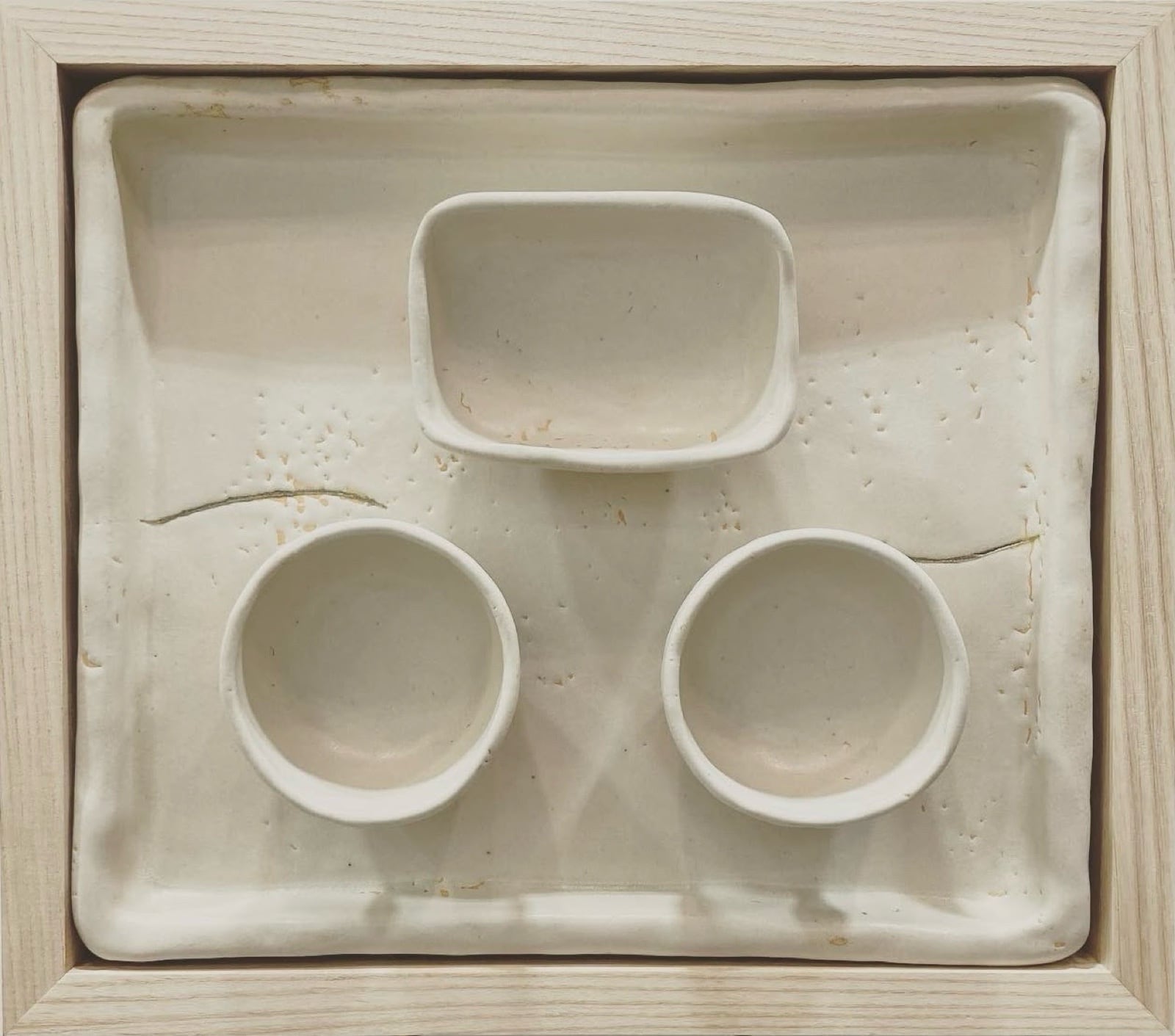
- Year 制作年
- 2025
- Medium 技法
-
mixed media
ミクストメディア
- Size サイズ
- 26 × 23 × 12.5 cm
Description
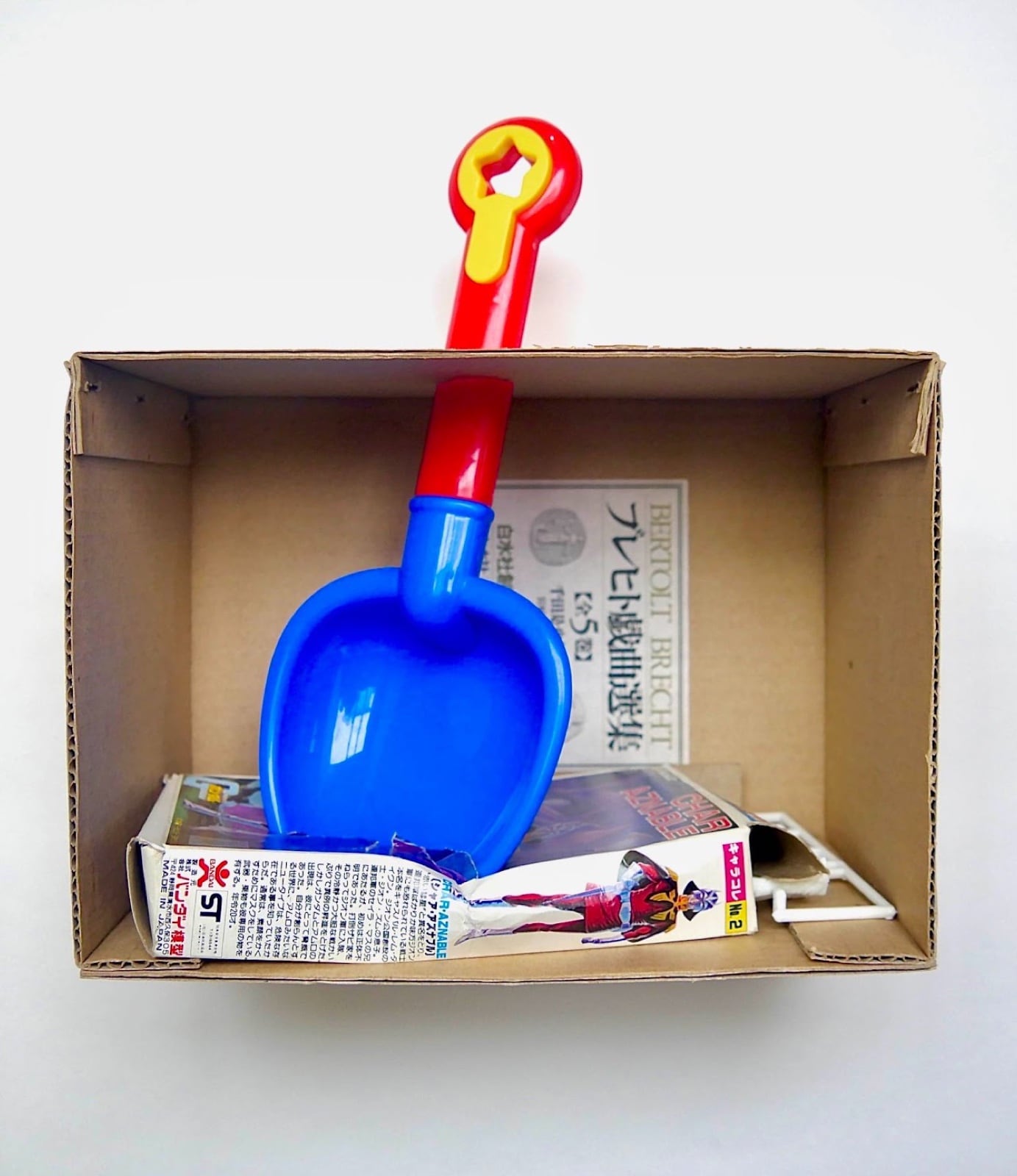
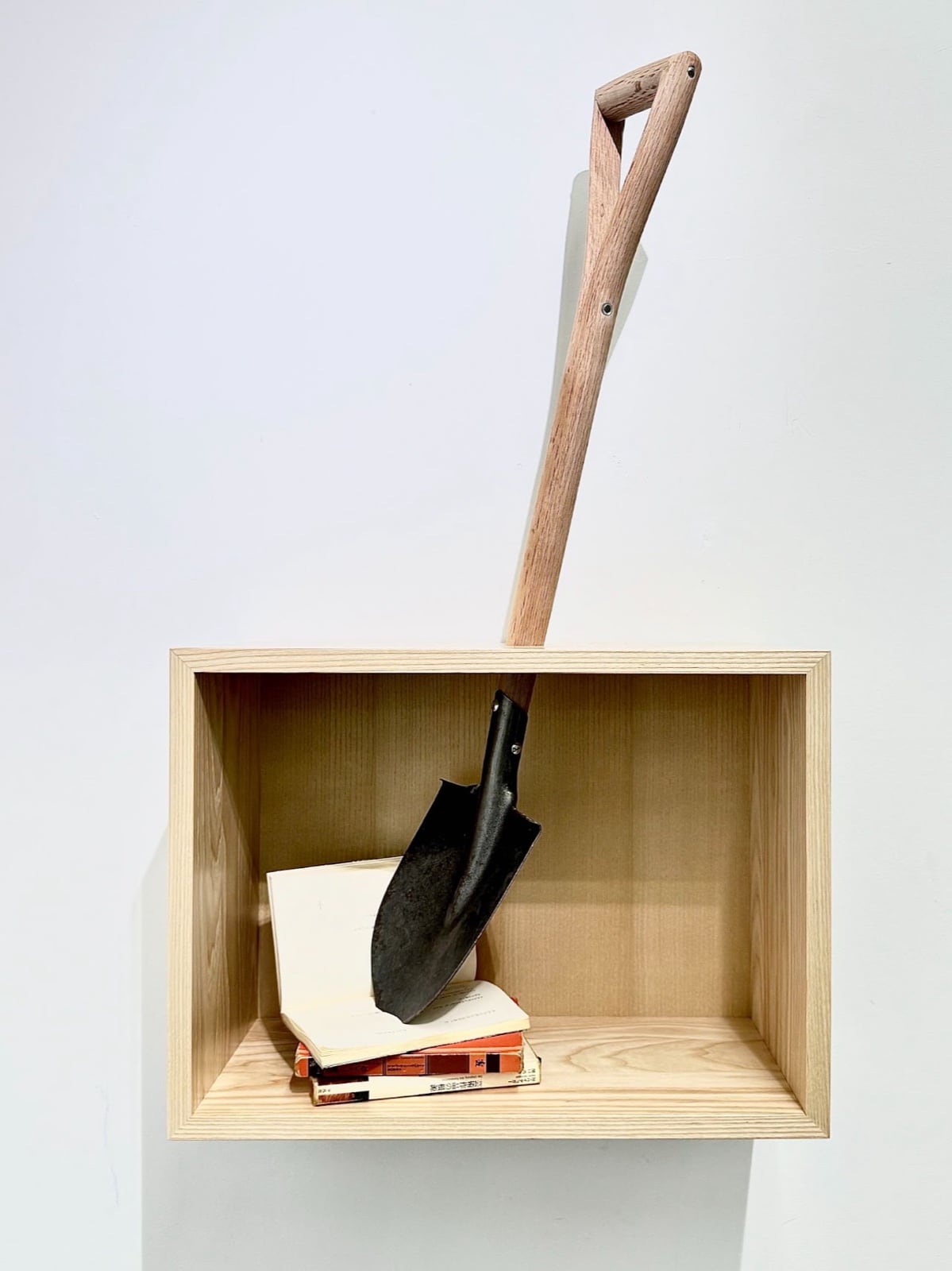
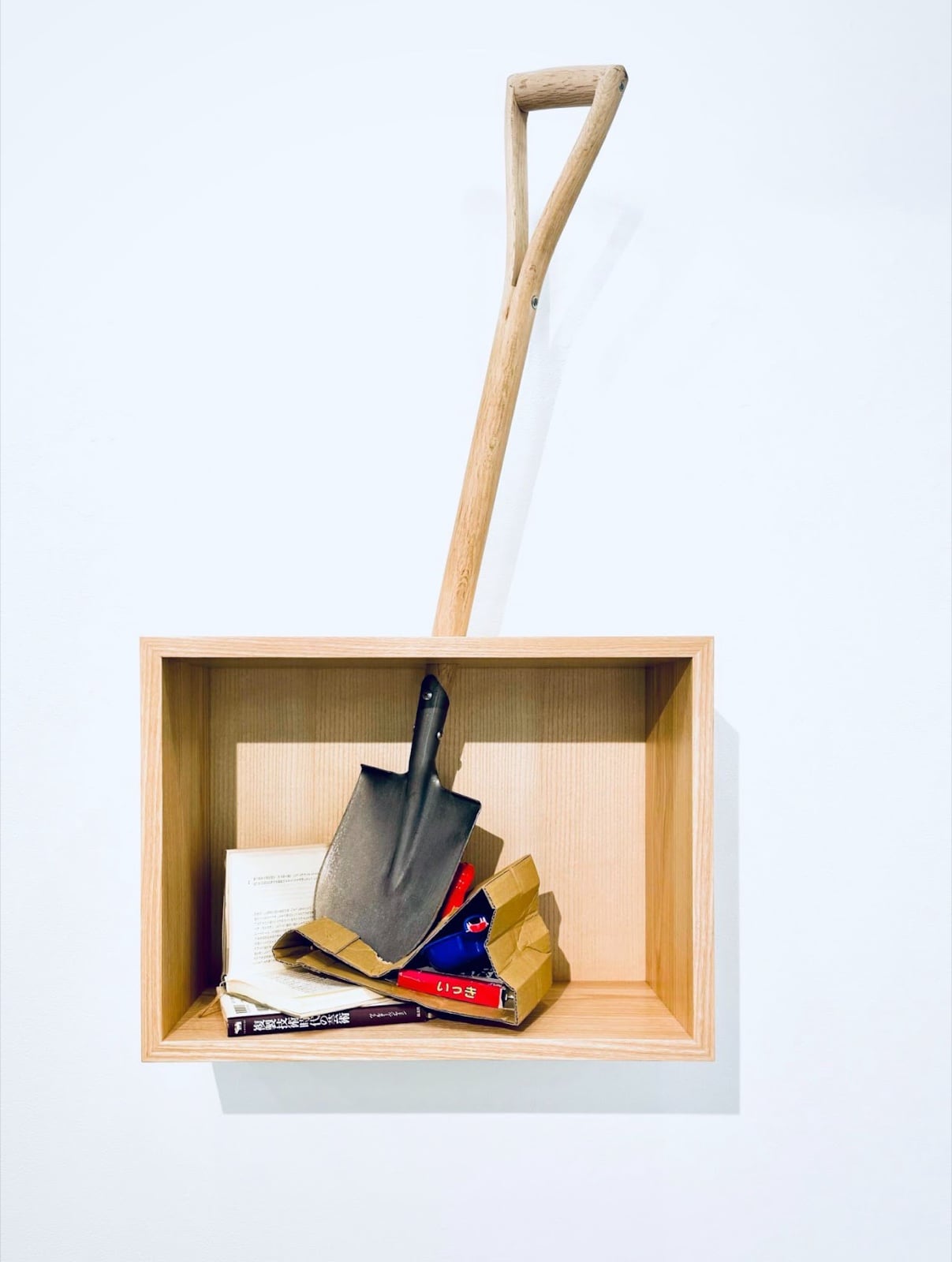
It gazes at me, and is gazed back at by me; I trace the outlines and protrusions, peer into the hollowed-out
opening, and even thrust my fingers into it.
In this way I depict, and indeed create, myself. It is an act of excavating my own being―or, to put it more graphically, of rummaging through my own viscera. That is how I have come to view it.
As I contemplated this, various elements began to intertwine, converge, and take shape: memories from my childhood, creation myths of humanity, books that influenced me profoundly in my youth, and themes of my own past works.
Creation myths in which human beings are fashioned from soil or mud exist around the world. The Japanese Kojiki and Nihon Shoki do not explicitly describe the origin of humanity itself, but from the Book of Genesis to the legend of Nüwa in China, and the traditions of Brahmanism in ancient India, the number is simply countless.
Paul Celan, the poet whose work killed the poetry writing in me when I was about twenty, wrote a poem titled “There Was Earth Inside Them.”
In the Book of Genesis, Adam, the first human, was created by God from the earth. So there is earth within every person; to delve into the self, one must dig into the earth that lies within―until the person reaches you.
The name “Adam” is the masculine form of the Hebrew word adamah, meaning “ground” or “earth,” while the English word “human” is said to derive from the Latin humus, meaning “earth” or “soil.”
In The Origin of the Work of Art, Heidegger discusses “world” and “earth” as a pair; the term he uses for “earth” is the German Erde, not Adam. Nevertheless, in the German version of the Book of Genesis, the text reads “Da formte Gott, der Herr, den Menschen aus der Erde” (“God [created] Adam from earth”), which allows for an interpretation that deems Adam and Erde synonymous.
While it is unclear whether Heidegger intended the term “earth” to also encompass the soil or earth that exists within human beings, if such an interpretation is permissible, one might well find a resonance with the concept of “world and earth”.
説明
自画像。
私を見つめ、また私に見つめ返され、輪郭と突起物をなぞり、穿たれた穴を覗き込み、さらにはそこに指を突っ込む。
そうして自分で自分を描く、また創る。
それは自分で自分を掘るという事、もう少し生々しく言えば、自分の内部をまさぐる事だと言えるのではないだろうか。そう考えてみた。
そうすると私の中で幼い頃の経験や人類創世神話、また若い頃に大きな影響を受けた書物、自分自身の過去作の内容などが結びついて立ち上がり形を成してきた。
人間が土や泥から作られたという人類創世神話は世界各地にある。残念ながら日本の古事記、日本書紀では人そのものの誕生は書かれてはいないが、創世記をはじめ中国の女媧や古代インドのバラモン教など、調べればとても書ききれないほど出てくる。
私が20歳前後の頃に詩のようなものを書く事をやめたきっかけである詩人パウル・ツェラン、彼の詩のひとつに『彼等の内には土があった』というものがある。
旧約聖書、創世記のアダム、最初の人間は神によって土から創られた。だから人の内部には土があり、自分を掘り下げるためには自分の内にある土を掘らなければならない。あなたに届くまで。
アダム / Adam はヘブライ語で地面や大地の意の adamah の男性形で、人間 / Human という言葉の語源はラテン語の大地 / Humus とされている。
ハイデガーの『芸術作品の根源』では「世界と大地」が対になって論じられるが、ハイデガーの用いる「大地」はドイツ語のErdeでありAdamではない。しかしドイツ語の創世記では「“Da formte Gott, der Herr, den Menschen aus der Erde”」となっていて、Menschenは人の意であるのでErdeは同義であると理解する事も出来る。
ハイデガーが大地という言葉に人間の内部の土、大地という意味を込めていたかはわからないが、そんな読み方が許されるなら「世界と大地」という概念に親しみを覚える事もできるだろう。
A self-portrait.