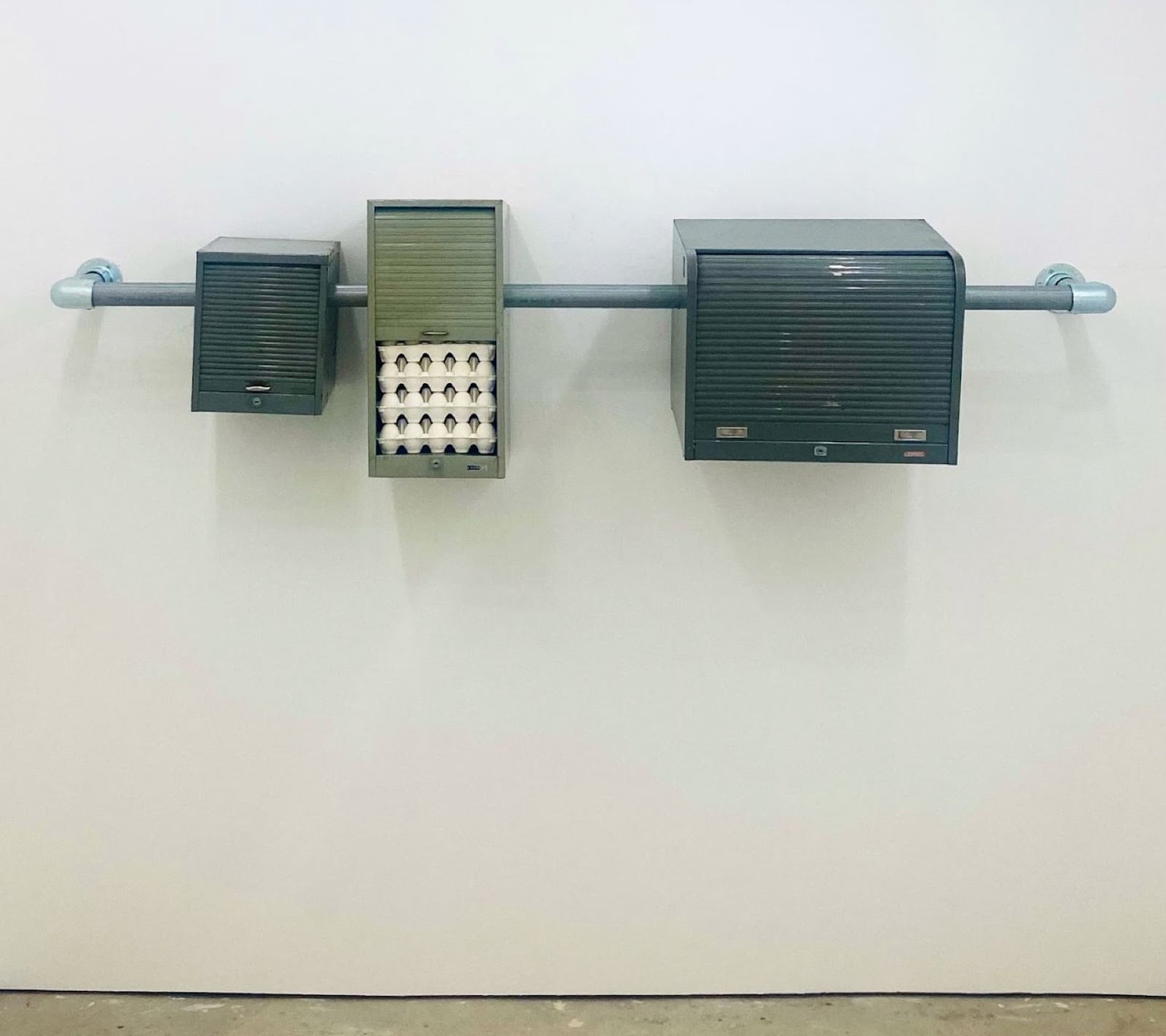
- Year 制作年
- 2024
- Medium 技法
-
Mixed media
ミクストメディア
- Size サイズ
- 133.5 × 211.5 × 15 cm
Description
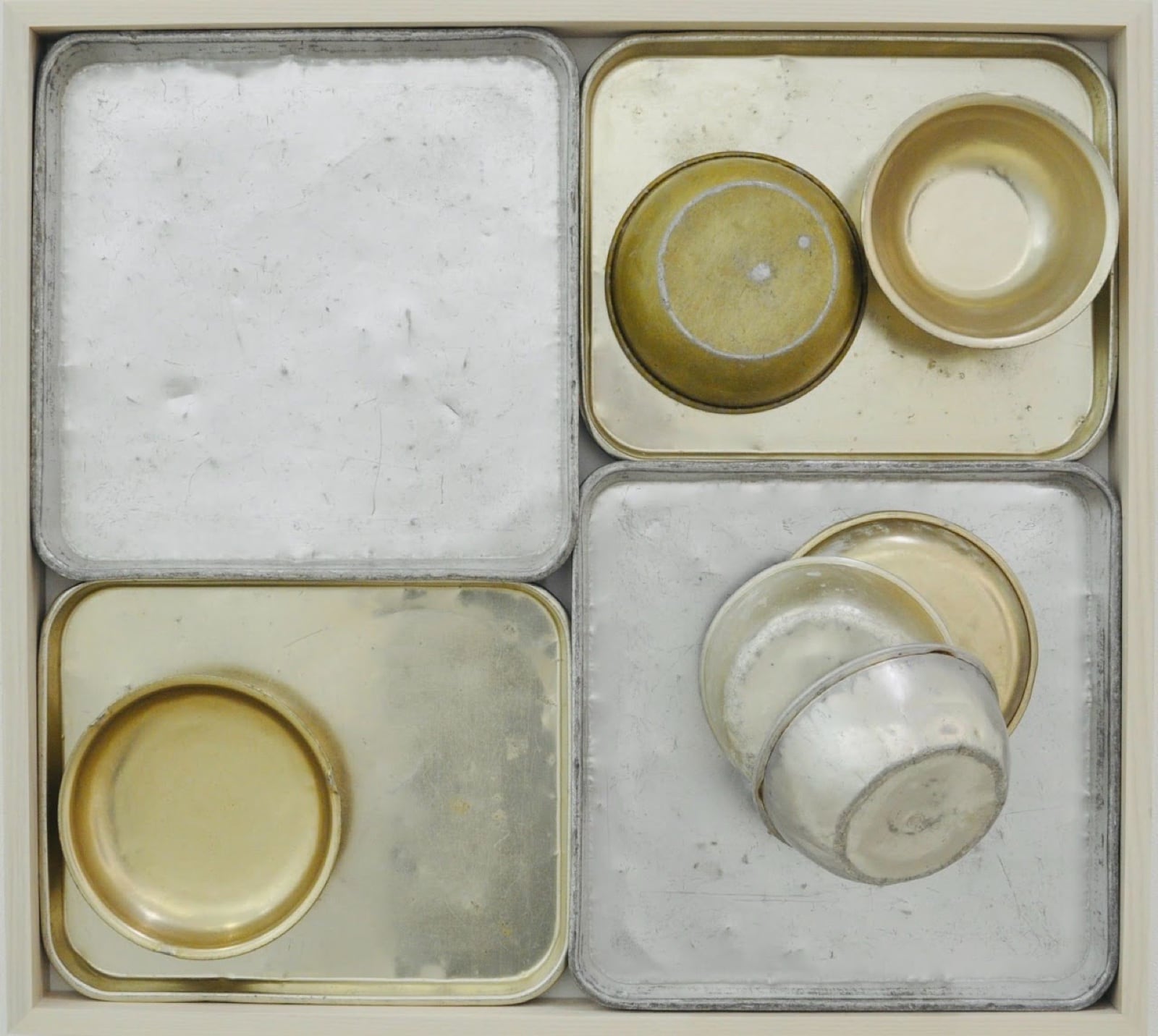
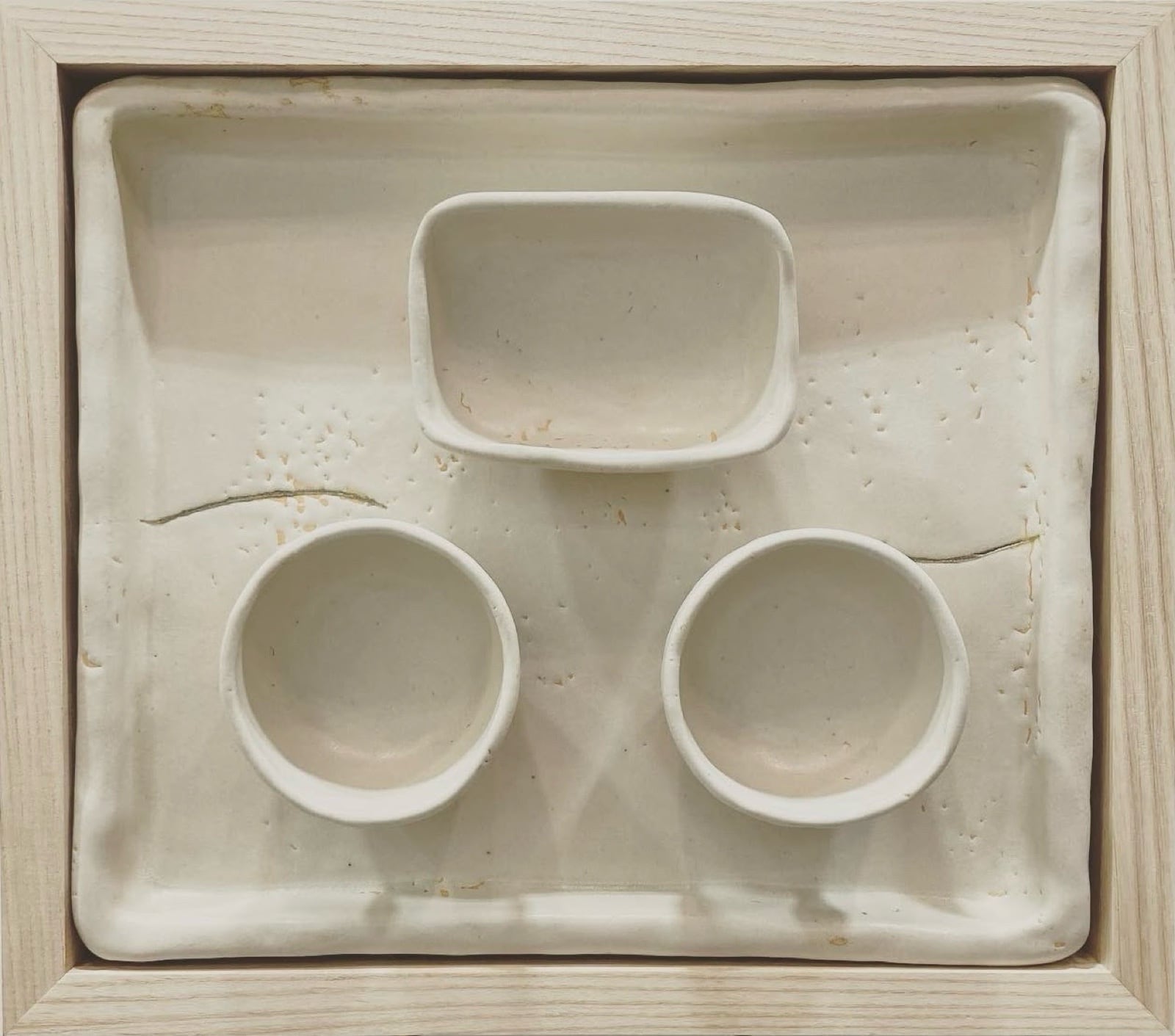
The series derives from ceramic works in which a vessel and a tray are integrated, as well as from reflections on the aesthetics of wabi-suki (austere, refined simplicity) and fūkyō (an eccentric,unconventional spirit).
It incorporates items such as aluminum tableware once used for school lunches.
In translating the critical spirit of wabi-cha, which appears to originate in figures like Rinzai and Ikkyū Sōjun, into the contemporary context, I found that there is nothing more suitable than those aluminum tableware once used by children for school meals.
Scratched, tarnished, and dented, these objects are tangible manifestations of the history and culture of the school lunch system―a program established in the wake of Japan’s defeat in World War II to address children’s malnutrition.
It is not a stretch to consider the system a foundation for a unique, Japanese–Western hybrid culinary culture in contemporary Japan.
Aluminum has high thermal conductivity, so it may feel somewhat hot to the touch; the time spent waiting for it to cool to a comfortable temperature, and the tea drunk from a worn, slightly grimy aluminum bowl, embody fūkyō.
“The cooking of a society is a language in which it unconsciously translates its structure.”
― Claude Lévi-Strauss, “The Culinary Triangle”
説明
器と盆が一体となった陶の作品をベースに、侘数寄や風狂について想いを巡らせ制作した作品。
かつて学校給食などで使われていたアルミ製の食器などを用いている。
臨済や一休宗純が由来とも思える侘茶の批判精神を私なりに現代に適用してみると、かつて学校給食で子供達が使用したアルミの食器ほど適したものはないのではないかと思えた。
傷つき、くすみ、凹んだそれらは、敗戦後の児童の栄養不足を省みて制度化された学校給食という歴史・文化の現れでもあり、和洋混合の特異な食文化の土台になっていたとも考えられる。
アルミは熱伝導が高く少し熱いかもしれないが、程よく冷めるまでの時間も、薄汚れたアルミの鋺で飲む茶もまた風狂。
「ある社会の料理が、無意識にその社会の構造を翻訳する一つの言葉である。」
クロード・レヴィ=ストロース『料理の三角形』