Yusuke Nakano / Paramodel
U to P
UとP展
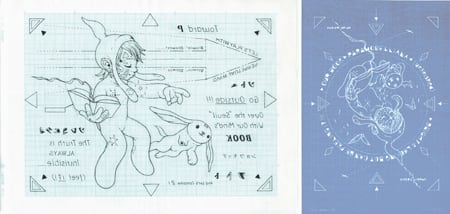
Press release
Talk event June 15 [Sun.] 15:00 to 17:00 An artist talk by Yusuke Nakano (Paramodel) will be held. Interviewers: Masayuki Kawai (video artist), Yuichi Mori (Director, MORI YU GALLERY) ※ Free admission, no reservation needed Painting and text. Paramodel's exhibition this time is presented with the world of Yusuke Nakano at its center. Nakano has gone back and forth in the space between painting and text. When fitting painting and text onto a plane at the same time, the creation and contradiction that spread out there. Such creation, contradiction, conflict and so on he turns into works as 'model play'. This time the exhibition is a reverse version of Paramodel, known for installations using Plarail, and many of Paramodel's various concepts are scattered throughout. Through the works Nakano made, the qualities of the work of the other member, Yasuhiko Hayashi, can also be seen. This is like an acrobatic feat that only they can perform. But what is carved at the end of the conflict between two lines is, for better or worse, probably a 'wound'. What is a 'wound'? There, perhaps, is a hint for grasping what lies 'between' painting and text, for understanding the 'between' of Paramodel. Nakano, who loves Bousquet's words: 'My wound existed before me; I was born to embody it.' Tenashi Inu, who bears a 'wound', is a character who has appeared since Paramodel was first formed. The planes, drawings, videos and so on that depict all things born from the missing forelegs of the wounded Tenashi Inu, from the missing forelegs of Tenashi Inu, like a loophole, a passage, are, in contrast to the gorgeous, beautiful aspect of the Plarail installations that connect to the outside, something meta that forms the reverse version of Paramodel: its core. As Nakano speaks of two-person relationships such as Fujiko Fujio, or Deleuze and Guattari, this relationship overlaps with the problem between two lines mentioned at the beginning. On one side there is the direction from creation, born because two terms, two people, are involved, to contradiction, conflict and then the 'wound'; on the other, Tenashi Inu, who bears the 'wound', exists, and one can create because the 'wound' exists: this bidirectionality can be seen in Paramodel. This is the paradox of Paramodel. In other words, Tenashi Inu can also be understood as the 'wound' of Paramodel itself. If so, it would be no exaggeration to say that Paramodel itself was formed in order to embody the 'wound'. To say that Paramodel is always already wounded sounds like someone's catchphrase, but behind their various concepts, which draw in even the outside, such a 'wound' is indeed hidden. Paramodel's creation and conflict continue like rails, crossing and then parting again. Yes, if you actually look closely at the Plarail installations, you are made to realize, belatedly, that there is an image like a 'wound'. Looking back, from the moment I negotiated with a company and found Plarail for Paramodel's first installation, no, from before that, perhaps I too was wounded,,, as one who could not but meet Paramodel. A 'wound' is a trace. The 'wound', which comes to be produced by the contact of something with something, exists on the horizon of the present as a sensation, different from memory and from external records, that only the one who bears the 'wound' can know. I can also understand it this way: only the 'wound' can express what the two of Paramodel can share; there is no passage connecting the two but the 'wound'. At the very least, the 'wound' is no small proof of this. Tenashi Inu had already been drawn before Paramodel... and this had already been written as text by Bousquet, and Nakano drew Tenashi Inu without knowing Bousquet. Let us return to painting and text. I once wrote about an artist named Aki Kuroda. 'Into Aki Kuroda's work 《Le Monde1991-1993》 (『世界』, 1991 to 93) is written a text by his friend, the novelist Pascal Quignard. Kuroda writes onto the canvas the text of twenty-odd sheets of roughly A4 paper that Quignard wrote for him. No, he draws it. The lines Kuroda wrote, drew, are also letters, écriture. What on earth is écriture turned into a tableau? Is the écriture I decipher Quignard's text or not? Or is it the line Kuroda drew? The threads of écriture that cannot be unraveled vanish into the sea of the tableau, as ice melts. Was it unraveled, or did it melt?' Between Kuroda and Quignard, Kuroda's works and Quignard's works, painting and text: what lies between these two terms? There is a work by Kuroda that may be the key to resolving this. A work titled 《conti/nuit/e》 (『連続のなかの夜』). In the continuum that is time, there is night. When on earth does night begin, and when does it end? As if differentiated, its interval is unclear, yet night certainly exists. Kuroda's paintings are hushed like the 〈eye〉 of a typhoon. But that is only, after all, a 'pause' that came unexpectedly in the midst of genesis and confusion. Where the lines are 'tangled', there is 'night' as 'figure'. But it does not remain tangled. As 'night' announces its end, the tangled time begins to move and the 'wind' starts to blow again. There, the frozen sea begins to melt and the tangled threads come undone. 'Tangling, then coming undone.' But there, there is noise, undulation. Night has a perspective close to darkness. The name of the magazine, 20 volumes of which Kuroda edited with Didier Ottinger as associate editor, was 『NOISE』. Of course, Paramodel differs from Kuroda's approach. But it is similar. The texts that Nakano writes and draws also seem, in the sea of his paintings and drawings, to form and vanish, vanish and form. Like night, they dissolve into morning and noon, and are born again after evening. And one can also think of it this way. Hayashi and Nakano are in the interval of time that is Paramodel (para // model). Then, when the two of Paramodel fix their gaze on each other far, far away, there is a sea between them as a passage. And yet that sea is never superflat; there is a slight noise, no, an undulation. Therein lies what makes them artists of MORI YU GALLERY. And what makes them Paramodel. Plarail floating on the surface of the sea, and the stinging seawater that would recall a deep wound. The Plarail installations are not something merely formal. They are swaying. Perhaps only those who bear a true 'wound' can understand it, but Nakano's paintings of water pipes and Hayashi's pipe installations unravel it for us in an easily understood way. This exhibition is also something that makes us recognize this anew. When the sea that exists between Paramodel grows rough, and the two who are between Paramodel, Nakano and Hayashi, become tangled, figure, in Kuroda's terms, a certain form, a trace, a 'wound' appears. Exactly so is the 'wound' from the contact of the two. Works produced while wounding and being wounded by each other have a strength and pain that none can match and, accompanied by the 'wound' borne by 'Shuntokumaru', produce undulation. Riding in a small boat floating between the two, one can always feel the waves of the sea that lies between them.' MORI YU GALLERY Yuichi Mori From now on, we hope that more and more people will come into contact with Paramodel's various aspects. The version of Nakano seen through Hayashi, too, some day. I think the fun of Paramodel will become more and more visible. Please come and see the exhibition.
プレスリリース
トークイベント 6月15日 [日] 15:00 - 17:00 中野裕介(パラモデル)のアーティスト・トークを実施いたします。 聞き手: 河合政之(ヴィデオアーティスト) 森裕一(MORI YU GALLERY代表) ※参加費無料、予約不要 絵画とテクスト。パラモデルの今回の展覧会は中野裕介の世界を中心に展覧される。中野は絵画とテクストの狭間を行き来してきた。絵画とテクストを同時に平面におさめる際、そこに広がる創造や矛盾。そうした創造、矛盾、葛藤、といったことを「模型遊び」として作品化する。今回はプラレールを使ったインスタレーションで知られるパラモデルの裏ヴァージョンとしての展覧会であり、パラモデルの様々なコンセプトが多く散りばめられている。中野が作った作品からもう1人のメンバー林泰彦の作品性も透かしみえるてくる。これは彼等にしかできない曲芸のようだ。しかし二系統間の葛藤の果てに刻まれるのは良くも悪くも「傷」であろう。「傷」とはなにか。そこにもしかすると絵画とテクストの「間」にあるものをつかむ、パラモデルの「間」を理解するヒントがあるかもしれない。 「私の傷は私以前に存在していた、私は、その傷を受肉するために生まれてきたのだ」というブスケの言葉を好む中野。「傷」をおったテナシイヌは、パラモデル結成当初から登場してくるキャラクターである。傷ついたテナシイヌの無い前足の部分から抜け道パッサージュのようなテナシイヌの無い前足の部分からうまれてくる万物を描いた平面やドローイング、ビデオなどは、プラレールインスタレーションの華やかで綺麗、かつ外部へと繋がっていく様相とは反対に、パラモデルの裏ヴァージョンをなすメタなもの、核となっている。藤子不二雄やドゥールーズとガタリといった二人の関係性を中野が語るように、この関係性は当初語った二系統間の問題と重なる。二項、二人がかかわるが故にうまれる創造から矛盾、葛藤そして「傷」へという方向性が一方であり、他方では「傷」を負ったテナシイヌが存在し、「傷」が存在する故に創造できるというという双方向性がパラモデルにはみてとれよう。これはパラモデルのパラドックスである。つまりテナシイヌはまたパラモデルそのものの「傷」とも解せるのだ。であるならばパラモデル自体、「傷」を受肉するために結成されたといっても過言ではないだろう。パラモデルはいつも既に傷ついているというとどこかのキャッチコピーのようだが、外部をも巻き込んでいく彼等の様々なコンセプトの裏には、やはりこうした「傷」が隠されているのだ。パラモデルの創造と葛藤はレールのように続き、交差してはまた離れていく。そう、実際プラレールインスタレーションをよくみてみると「傷」のようなイメージがあることにいまさらながら気付かされるのだ。思い返せば、パラモデルの最初のインスタレーションのため、企業にかけあって私がプラレールを見つけてきた瞬間から、否それ以前から、私も傷いていたのかもしれない、、、パラモデルと出会わざるをえないものとして。「傷」は痕跡である。何ものかと何ものかの接触によりうみだされてしまう「傷」は、記憶とも外部の記録とも違う「傷」を背負ったもの自らしか知り得ない感覚として現在という地平に存在している。「傷」でしかパラモデル二人の共有可能なものを表せない、「傷」しか二人を繋ぐパッサージュはないとも私には解せる。すくなくとも「傷」はその少なからぬ証なのだ。テナシイヌはパラモデル以前に既に描かれていた…そしてこのことはブスケにより既にテクストとして描かれており、中野はブスケを知らずしてテナシイヌを描いていた。 絵画とテクストに戻ってみよう。以前黒田アキというアーティストに関して書いたことがある。 「黒田アキの作品《Le Monde1991-1993》(『世界』、1991-93年)には、彼の友人である小説家パスカル・キニャールの文章が書き込まれている。キニャールが黒田のために書いたA4ほどの紙20数枚の文章を黒田がキャンヴァスに書いていく。いや描いていく。黒田の書いた、描いた線は文字、エクリチュールでもある。いったいタブローと化したエクリチュールとはなにか。わたしが読み解くエクリチュールは、キニャールの文章であるのかどうか。それとも黒田の描いた線か。解けないエクリチュールの糸が、氷がとけるように、タブローの海に消えていく。それは解けたのか、溶けたのか。」 黒田とキニャール、黒田の作品とキニャールの作品、絵画とテクスト、これらの二項間にはなにがあるのか。それを解く鍵となろう黒田の作品がある。《conti/nuit/e》というタイトルの作品(『連続のなかの夜』)。時間という連続の中に夜がある。夜はいったいいつから始まりいつ終わるのか。微分されるように、その狭間は判然としないものの、確かに夜はある。黒田の絵画は台風の〈目〉のように静まりかえっている。しかしそれはあくまで、生成と混乱のさなかに、不意に訪れた「休止」でしかない。線が「縺れた」ところに、「フィギュール」としての「夜」がある。しかし、それは縺れたままではない。「夜」が終わりを告げるとともに、縺れた時間が動き出し、また「風」が吹き始める。そこで凍った海は溶け出し、縺れた糸は解けていく。「縺れては解ける」。しかしそこにはノイズが、アンデュレーションがある。夜は闇に近いパースペクティブを持つ。黒田がディディエ=オッタンジェを副主幹にして20巻を編集した雑誌の名前は『NOISE』であった。 もちろんパラモデルは、黒田のアプローチとは異なる。しかし似ているのだ。中野の書く、描くテキストも彼の絵画やドローイングの海の中で結んでは消え、消えては結ぶかのようにみえてくる。夜のように、朝に昼に解けてはまた夕方の後に生まれてくる。そしてまたこのようにも考えられる。パラモデルという時間の狭間(パラ//モデル)に林と中野はいる。するとパラモデル二人が互いを遥か彼方に見据える時、その間に広がるパッサージュとしての海が在る。然るにその海は決してスーパーにフラットではない、僅かにノイズが、否アンデュレーションがある。そこにモリユウギャラリーのアーティストたる所以がある。パラモデルたる所以もある。海面に浮かぶプラレールと深い傷を想いださせるであろう沁みる海水。プラレールインスタレーションはたんなるフォーマルなるものではない。揺れているのだ。それは本当の「傷」を負ったものにしかわからないのかもしれないが、中野の水道管を描いた絵画や、林のパイプのインスタレーションはそれをわかりやすく紐解いてみせてくれる。そうしたことを再認識させてくれるのが今回の展覧会でもある。パラモデルの間に存在する海が荒れ、パラモデルの間にいる中野と林の二人が縺れた時、黒田でいうところのフィギュール、あるカタチ、痕跡、「傷」があらわれる。まさに二人の接触による「傷」がそうなのだ。傷つけ、傷つき合いながら生み出される作品は、追随を許さないほどの強さと痛みを持ち、「俊徳丸」の背負った「傷」をともないアンデュレーションを生み出す。二人の間に浮かぶ小舟に乗っていると常に二人の間にある海の波を感じられるのだ。」 モリユウギャラリー森裕一 これからますます多くの方々にパラモデルの様々な側面に触れて頂きたいとおもっております。林から透かしみた中野というヴァージョンもいずれまた。ますますパラモデルの面白さがみえてくるかとおもいます。 どうぞ御高覧ください。