Man Katano
2010
2010
Press release
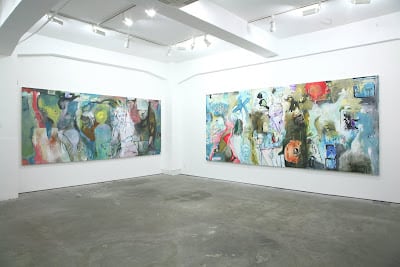
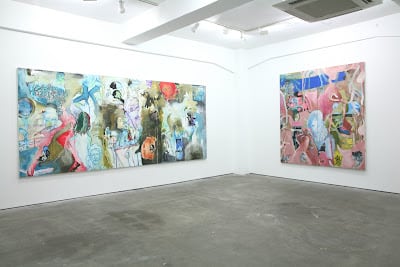
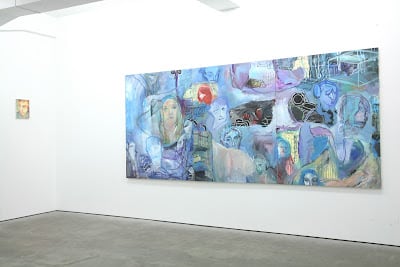
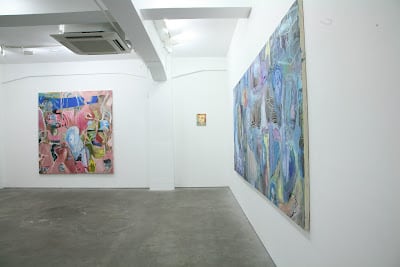
Katano has lived for many years in London and Poland. Viewers who see his paintings may feel that they are so-called 'Expressionist' paintings. But is that really so? 'I have always been more interested in how to paint than in what to paint. It feels as if my brain follows my reflexes. I think that is the only way not to lose to "painting".' '2010 is an attempt to reject the ideas of contemporary art and of the art-like, and the setting-up of concepts, to pursue only the appeal of painting, and in doing so to become what Japanese art truly is. I don't think about anything, so isn't being thoroughly painting-oriented in content exactly what now, the contemporary, is?' Man Katano. 'My work is different from so-called painting and from historical context,' Katano declares. It certainly is different. But where does it differ? Katano also says, 'Something whose skill is immature must not be taken as contemporary painting.' But this 'skill' is a tricky thing. 'Reflexes', 'skill': there, although Katano does not say much, his extension suddenly shows its face. The 'skill' of fitting an enormous amount of information onto a single picture plane with the greatest of ease is in a sense violent, and at the same time extremely intellectual. Katano, who has also thought about the relationship between the world seen from Japan and Japan seen from the world, in fact also keeps his distance from the recent Japonisme that, under the name of contemporary art, runs counter to the values and sensibility of pre-modern Japanese art and craft. Katano thinks that such things, on the contrary, evoke a modern Japanese sense of pathos, and are to be loathed simply because they are political. Katano's antithesis to the context of so-called West-centered contemporary art, which stands at the opposite pole to the Japanese, can be called a 'skill' different from cheap Japonisme. The skill Katano shows is a means of standing up to the overwhelming thing outside called 'painting'. It lies somewhere 'far away' inside Katano, different from a concept: a 'skill' that can only be called reflexes that now do not go through the brain. It is something he acquired naturally during his long life abroad. What is the enormous imagery overflowing in Katano's paintings? It can be said to be the complete depiction of all the seeds of the theme entrusted to a single painting, that is, of its extension. In that sense, Katano's paintings are paintings not of expression but of extension. He is an artist who aims at how to paint, not what, and who paints not expressionistically but extensionally, with enormous intellectual power. And his paintings go on expanding. An artist rare in Japan, who has at last made Japan his home for three and a half years: before he goes off again to some country in Europe, so that he does not go...., please come and see Man Katano's solo exhibition.
プレスリリース
" 片野は長年ロンドン、ポーランドに滞在してきました。彼の絵画をみた鑑賞者は、いわゆる「表現主義」的な絵画だと感じるかもしれません。はたしてどうなのでしょうか。 「何を描くかよりどう描くかにずっと興味があります。反射神経に脳みそがついていく感じです。それが『絵画』に負けない唯一の方法だと思います。」 「現代美術やアート的な観念、コンセプト擁立を否定してペインティングの魅力のみを追求している、そのことで本来の日本の美術たりえようとするのが2010。何も考えてませんのでペインティング・オリエンテッドな内容に徹底することこそ、今・現代ではないか?」 片野まん 「自分の作品はいわゆる絵画や史的文脈とは違う」と片野は断言します。確かに違うのです。しかしどこが違うのでしょうか。片野は「技量が未熟なものをもって現代絵画としてはならない」とも語ります。 ただこの「技量」というのが、くせもの。「反射神経」、「技量」、そこには片野が多くを語らないながらも、彼の外延がふと顔をみせるのです。膨大な情報量をいとも容易く一枚の画面に収める「技量」は一種暴力的でもあり、同時に非常に理知的でもあります。日本からみた世界、世界からみた日本との関係についても考えてきた片野は、実は現代アート、現代美術の名の許で近代以前の日本美術、工芸的価値観と心性に逆行している昨今のジャポニスムとも距離を置くのです。そうしたことは却って近代日本的悲壮感を感じさせるものであり単に政治的なため嫌悪するものである、と片野は考えます。片野の日本的なるものと対局にあるいわゆる西洋的中心の現代美術の文脈へのアンチテーゼは、やすいジャポニスムとも異なる「技量」といえましょう。片野の示す技量は、外にある『絵画』という圧倒的なものに対抗する手段なのです。それは片野の内部のどこか「遠いところ」にあって、コンセプトとは違う、今や脳を介さない反射神経としか言いようがない「技量」。それは長い海外生活の間に自然と身に付けたものなのです。片野の絵画にあふれる膨大なイメージとは、なんなのか。それは一枚の絵画に託したテーマの種のすべて、すなわち外延を描ききったものといえましょう。そうした意味では片野の絵画はexpressionではなく、extensionな絵画なのです。何をではなく、どう描くかを志向し、表現主義的にではなく、膨大な知力でもって外延的に描く作家なのです。そしてまた彼の絵画は拡張し続けます。 日本では稀有な作家、ようやく日本を住処にして3年半、彼がまたヨーロッパのどこかの国に行ってしまう前に、しまわないように、、、、どうぞ片野まん個展をご高覧下さい。 "
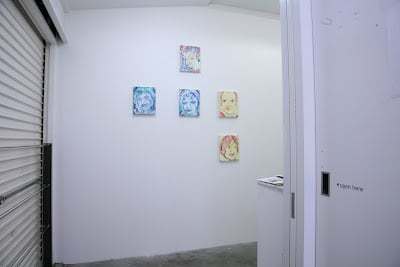
Installation views 展示風景